
1,300+

Endoscopic Cases

98%+

Capsular Contracture Success Rate

Published

in Aesthetic Surgery Journal

Up to 1,445cc

Through the Armpit

Most Surgeons Say Breast Implant Revision Can’t Be Done Through the Armpit. Here’s Why They’re Wrong.

If you have breast implants and need revision surgery, you have probably been told that a new incision on your breast is unavoidable. Surgeon websites, patient forums, and Q&A platforms repeat this claim so consistently that most women accept it as fact. For traditional transaxillary breast augmentation — the blind technique performed without camera guidance — this was true. The surgeon could not see inside the breast pocket from the armpit, making precise revision impossible through that incision.

Endoscopic technique changes that equation entirely. Using a 30-degree camera inserted through the original armpit incision, I can see the capsule, the implant pocket, and every structure inside the breast in high definition. This is the same minimally invasive camera technology used in laparoscopic abdominal surgery, arthroscopic knee and shoulder repair, and dozens of other procedures where it has been standard of care for decades. With the endoscope, breast implant revision through the armpit is not only possible — it is a precision procedure with documented outcomes in over 1,300 patients.

What Conditions Can Be Revised Endoscopically Through the Armpit?

Implant Exchange

Size changes (larger or smaller), saline to silicone conversion, switching to a newer generation implant, and replacing ruptured or deflated implants.

I routinely place implants up to 800cc through the axillary approach, with sizes up to 1,445cc possible.

 The exchange procedure is typically shorter and recovery easier than the original augmentation because the pocket already exists.

Capsular Contracture (Grade II–IV)

Capsular contracture — when the scar tissue capsule around the implant thickens and tightens — is the most common reason women need revision. For many patients with Grade II through Grade IV contracture, I can address this endoscopically through the armpit.

For less severe cases, endoscopic capsulotomy releases the tight capsule under direct visualization. For advanced contracture, I perform a complete endoscopic capsulectomy — removing the entire capsule through the armpit. After removal, I place a sheet of Strattice acellular dermal matrix and a new implant. A drain is necessary for this procedure.

Few surgeons in the world perform complete capsulectomy endoscopically. My case series of hundreds of patients shows a greater than 98% success rate with this approach, meaning the vast majority of patients do not develop recurrent contracture.

Implant Malposition

Bottoming out, lateral displacement, superior malposition, and symmastia can all be addressed through endoscopic capsulorrhaphy — placing internal sutures to redefine the pocket boundaries. In mild cases, heating the capsular tissue with endoscopic cautery is enough to make smaller adjustments. Sutures can be placed endoscopically or percutaneously through small needle holes that leave no scars. In all cases, the correction is confirmed with direct endoscopic visualization before closing.

For implants that are riding too high due to breast drooping over a submuscular implant, the implant can be repositioned endoscopically to a new pocket above the muscle to resolve the issue.

Implant Rupture or Deflation

Removal and replacement of ruptured silicone or deflated saline implants through the original armpit incision.

 In most cases, this is the most straightforward revision scenario.

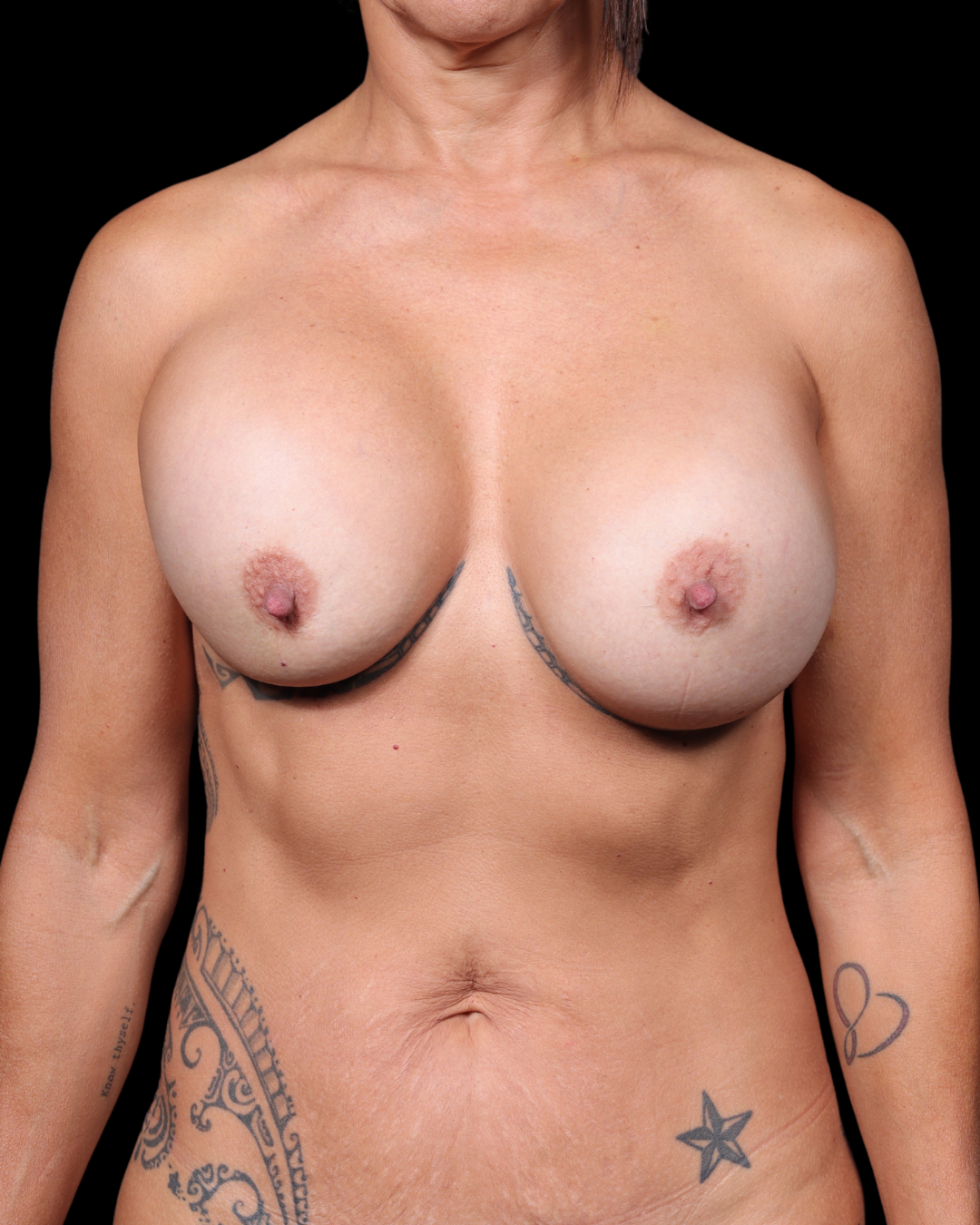
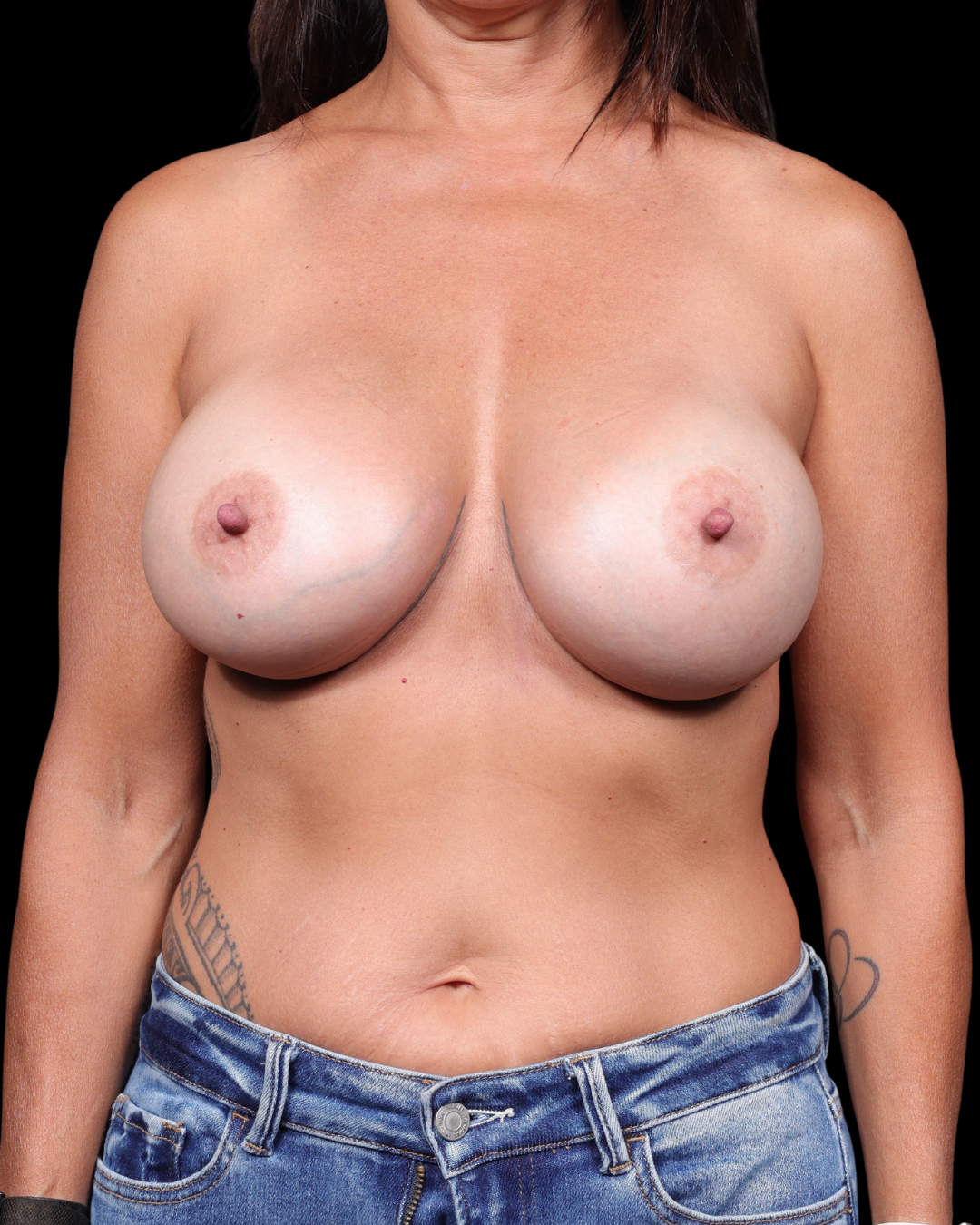
Before & After

How Endoscopic Revision Works

The procedure begins through the same armpit incision used for your original augmentation. No new incisions are made on the breast. I insert a 30-degree endoscope — a rigid camera that projects the entire surgical field in high definition onto a monitor.

With this visualization, I can see the capsule that has formed around your implant. I can evaluate whether it is normal, thickened, or contracted. I can identify exactly where the pocket has stretched, where sutures need to be placed, and where tissue needs to be released or removed. Every step is performed under direct camera guidance — not by feel.

After the revision is complete, the endoscope confirms that the implant sits in the correct position within the newly modified pocket before the incision is closed.

woman laying on beach chair in water with white bathing suit

Why Most Surgeons Don’t Offer This

Endoscopic breast surgery requires specialized equipment and a different set of surgical skills than the conventional technique. Most plastic surgery residency programs do not include dedicated endoscopic breast surgery training. The learning curve is significant, the equipment investment is substantial, and surgeons with established practices using conventional approaches have limited incentive to adopt a new technique.

The result is that fewer than 10% of plastic surgeons offer transaxillary primary augmentation. The number who offer endoscopic revision through the armpit is smaller still. When surgeons who do not perform this technique tell patients that revision through the armpit is impossible, they are applying a limitation of their training to a procedure they have not been trained to perform.

When Endoscopic Revision Is Not Appropriate

Honesty about limitations is as important as explaining capabilities.

If you need a concurrent breast lift (mastopexy), that requires incisions on the breast by definition. The lift addresses skin excess and nipple position, which cannot be managed through a remote incision.

Complex revision scenarios involving significant tissue rearrangement or internal bra placement may also require direct access that exceeds what the axillary approach can provide.

The distinction is not binary. Many revisions can be performed through the armpit. Some cannot. A surgeon experienced in both endoscopic and open approaches can evaluate your specific situation and recommend the technique most likely to achieve a lasting result.

For patients who require conventional revision through an inframammary or periareolar approach, Dr. Ching offers comprehensive breast implant revision using advanced materials including Strattice and AlloDerm. Learn more about all revision options.

Published Outcomes

My case series of over 1,300 endoscopic transaxillary breast augmentations was published in the Aesthetic Surgery Journal: Open Forum in 2026. Key findings:

  • Overall complication rate: 6.69% — at the lower end of published norms across all incision approaches.
  • Malposition rate: 3.64% — comparable to published rates for inframammary and periareolar techniques.
  • Capsular contracture rate: 1.74% — comparing favorably with the best published outcomes.
  • Complications were largely managed using endoscopic techniques — through the same armpit incision, not through new breast incisions.

This data provides the clinical foundation for endoscopic revision. The same technique used for primary augmentation is used for revision, with documented long-term outcomes across a large patient cohort.

The 5-Step Patient Journey

Step 1: Virtual Consultation

A video appointment where I review your surgical history, current concerns, imaging, and goals. I will tell you directly whether endoscopic revision is appropriate for your case or whether a different approach would serve you better.

Step 2: Surgical Planning

Once we agree on a plan, our office coordinates scheduling. For out-of-state patients, we recommend arriving in Honolulu two days before surgery for the in-person pre-operative appointment.

Step 3: Surgery

Performed at our accredited surgical facility in Honolulu under general anesthesia. Surgical time ranges from one to three hours, depending on complexity. All endoscopic revisions are outpatient procedures.

Step 4: Recovery

Most patients return to normal activities within one week. Recovery is typically easier than the original augmentation. Out-of-state patients should plan to stay in Honolulu for five to seven days post-operatively.

Step 5: Follow-Up

Virtual follow-up appointments at two weeks, six weeks, and three months. Photographs are reviewed at each appointment to monitor healing and implant settling.

Find Out If Endoscopic Revision Is Right for You

Virtual consultations available for patients nationwide. Review your surgical history, imaging, and goals with Dr. Ching to determine whether endoscopic revision through the armpit is appropriate for your specific situation.

BOOK YOUR VIRTUAL CONSULTATION

FAQs

Can breast implants be replaced through the armpit?

Yes. In the majority of cases, implant exchange can be performed through the original armpit incision using endoscopic technique. The pocket already exists, making the exchange typically easier than the original augmentation. I routinely place implants up to 800cc through the axillary approach, with sizes up to 1,445cc possible.

Is scarless breast implant revision really possible?

For many revision scenarios, yes. Endoscopic technique provides camera-guided visualization through the armpit incision, enabling implant exchange, capsulotomy, capsulectomy, and capsulorrhaphy without new incisions on the breast. Revisions that require a concurrent breast lift or certain complex reconstructions do require breast incisions.

Can capsular contracture be fixed without new scars on the breast?

For Grade II through Grade IV capsular contracture, endoscopic revision through the armpit is a viable option for many patients. I can perform capsulotomy, capsulorrhaphy, or complete capsulectomy with Strattice acellular dermal matrix placement through the armpit incision. My case series shows a greater than 98% success rate with endoscopic capsulectomy.

What is endoscopic capsulorrhaphy?

Endoscopic capsulorrhaphy is a procedure where sutures are placed inside the implant capsule under camera guidance to redefine the pocket boundaries. It is used to correct implant malposition including bottoming out, lateral displacement, and superior malposition. Sutures can be placed endoscopically or percutaneously through small needle holes that leave no visible scars.

Can a surgeon fix implant bottoming out through the armpit?

Yes. Endoscopic capsulorrhaphy through the armpit corrects bottoming out by placing sutures that raise the lower pocket boundary, restoring the inframammary fold position. In mild cases, heating the capsule with endoscopic cautery is enough. The correction is confirmed visually with the endoscope before closing.

Do I need a new incision to change my implant size?

If your original augmentation was performed through the armpit, most size changes can be done through the same incision. For larger implants, the pocket can be expanded under endoscopic visualization. For smaller implants, capsulorrhaphy tightens the pocket around the new implant. No new incisions on the breast are needed.

What is endoscopic capsulectomy?

Endoscopic capsulectomy is the complete removal of the scar tissue capsule around a breast implant, performed through the armpit incision using camera guidance. After removal, a sheet of Strattice acellular dermal matrix is placed and a new implant is inserted. A drain is necessary. This is a technique very few surgeons in the world perform endoscopically.

Can endoscopic revision be done if my original surgery used a different incision?

In some cases, yes. For straightforward implant exchanges without significant pocket modification, switching to the axillary approach is sometimes possible regardless of the original incision location. Complex revisions may require access through the original incision site. This requires individual evaluation.

How long is recovery from endoscopic breast implant revision?

Most patients return to normal daily activities within one week and full exercise within three to six weeks, depending on the complexity of the revision. Recovery is typically easier and faster than the original augmentation because the pocket already exists and the tissues have adapted.

I don’t live in Hawaii. Can I travel for endoscopic revision surgery?

Yes. A significant portion of my revision patients travel from the mainland United States and internationally. The process begins with a virtual consultation, followed by travel to Honolulu for surgery, a five-to-seven-day recovery period, and continued follow-up via virtual appointments after returning home.

See our results in the wild

@shimchingmd

REQUEST YOUR EDOSCOPIC BREAST IMPLANT REVISION CONSULTATION

Connect with a Patient Care Coordinator to Discuss Your Goals

© Shim Ching MD. All Rights Reserved. Digital Marketing & Design by Studio 3 Marketing®.

Terms & Conditions Privacy Policy

Contact Us