
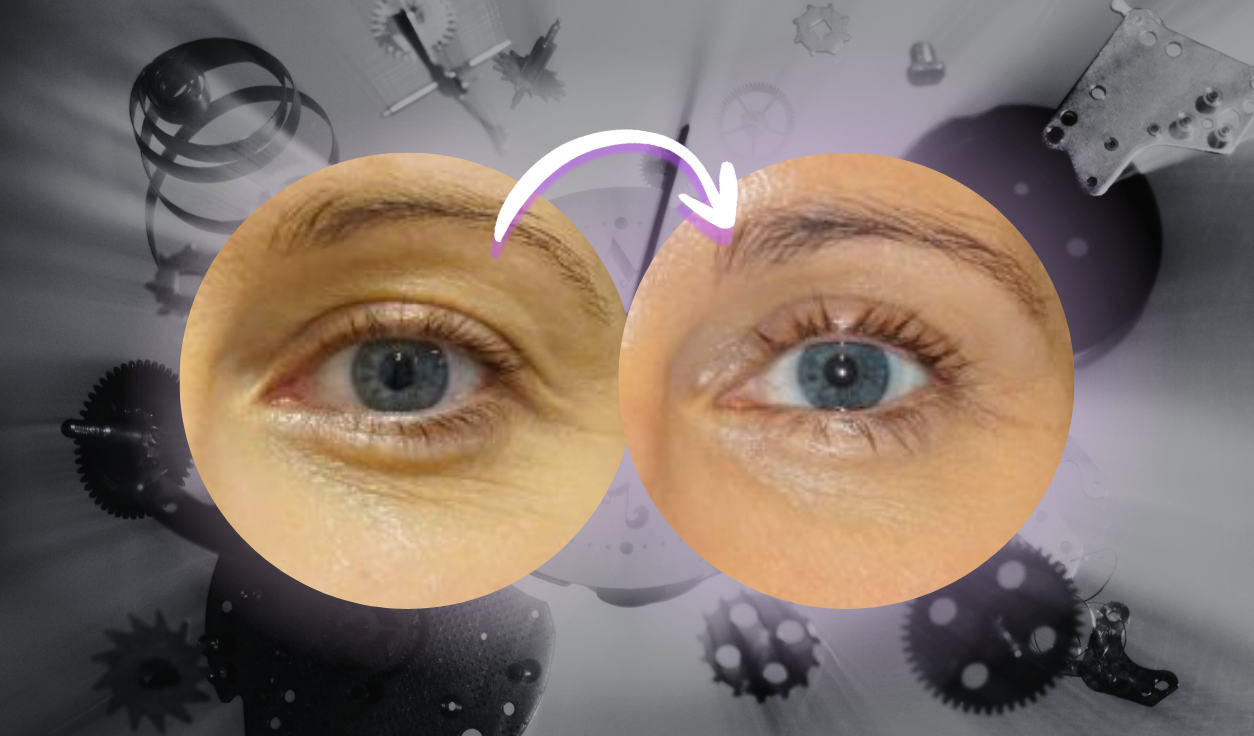
And What Makes Results Fade Faster
You don't wake up one morning and decide to obsess over your eyes.
It's usually slower than that.
A photo you didn't like. A glance in a harsh bathroom mirror. A moment where you realize your face looks tired… even when you're not. And once you see it, you can't unsee it.
If you're here, you're asking one very specific question: How long does blepharoplasty last?
Now, the real version of that question is: “If I do this… will it actually hold up?”
Put differently, if you invest in yourself, how long will your investment last and is it worth it?
No fluff. No dreamy promises. Just what lasts, what changes, and what you can do to help your eyelid surgery results stand the test of time, because there are a few things you can do to give yourself a higher ROI.
First, what blepharoplasty actually changes
A blepharoplasty procedure is a cosmetic eyelid surgery designed to improve the appearance of your eyelids by addressing things like:
- Excess skin (extra skin that hangs or folds)
- Excess fat / fat deposits that create under-eye bags or puffiness
- Loose skin that makes the eye area look heavy, swollen, or older than you feel
- In some cases, drooping eyelids that affect the field of vision
It can involve:
- Upper blepharoplasty (aka upper eyelid surgery or upper eyelid blepharoplasty) for the upper eyelids
- Lower blepharoplasty (aka lower eyelid surgery or lower eyelid blepharoplasty) for the lower eyelids
- Or both, depending on your aesthetic goals and what your facial structure is doing
This isn't skincare. This is a surgical procedure that changes anatomy.
And that's why it tends to last.
So… how long does blepharoplasty last?
As a plastic surgeon who has performed thousands of these procedures, here's the honest answer:
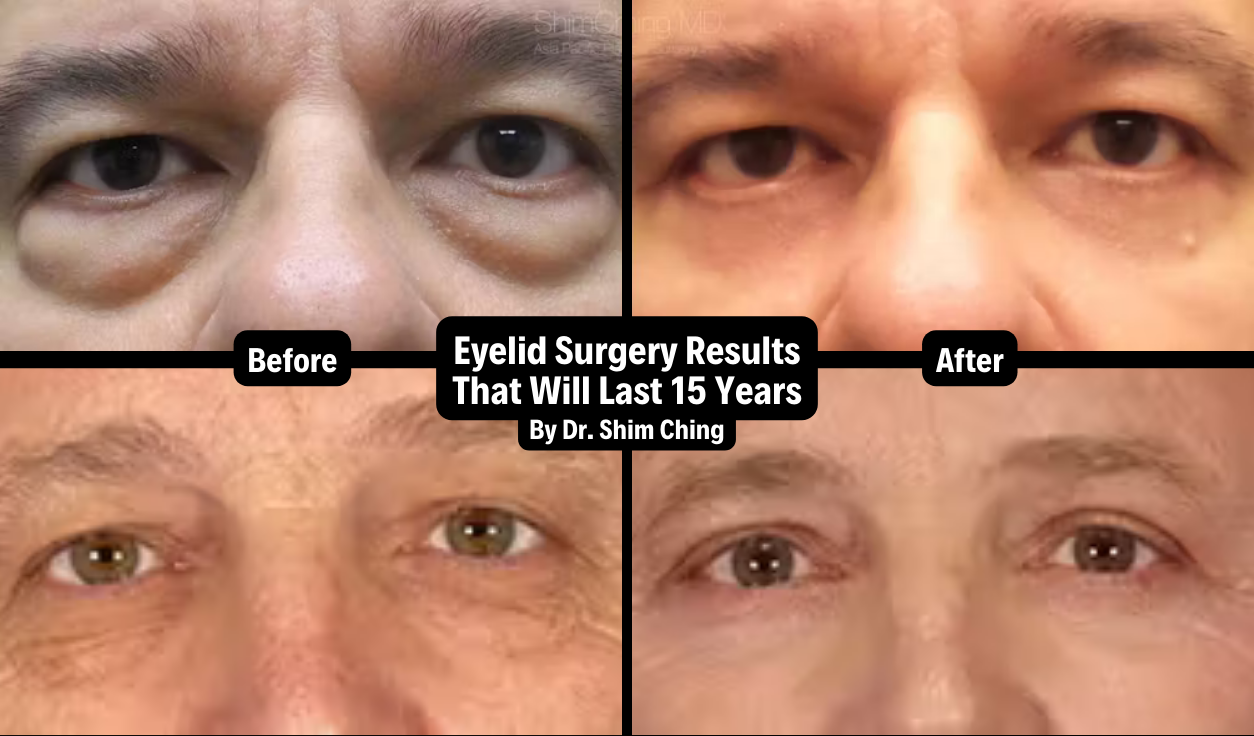
Upper blepharoplasty tends to last a long time, 10+ years
Sometimes longer. Sometimes much longer.
But the upper lids are more affected by the natural aging process, gravity, and brow position over time. If your brow drops (or already sits low), your upper eyelids can start looking heavy again—even if the surgery itself was done perfectly.
Lower blepharoplasty often lasts even longer, 15+ years
And in many people, the improvement can look like a “permanent fix” for the under-eye bag problem.
Not because your face stops aging. It won't.
But because lower lid puffiness from fat deposits (and certain undereye bags) doesn't always “come back” the same way once it's corrected properly.
That's the big picture.
The longevity of the results depends less on the calendar and more on what caused the issue in the first place.
The part nobody explains clearly: what you think is “eyelid aging” might be your brow
This matters more than people expect. If your main issue is a heavy-looking upper lid, it might be:
- True excess skin on the upper lids
OR - A low brow pushing tissue downward, creating the appearance of extra skin
That's where a brow lift conversation shows up.
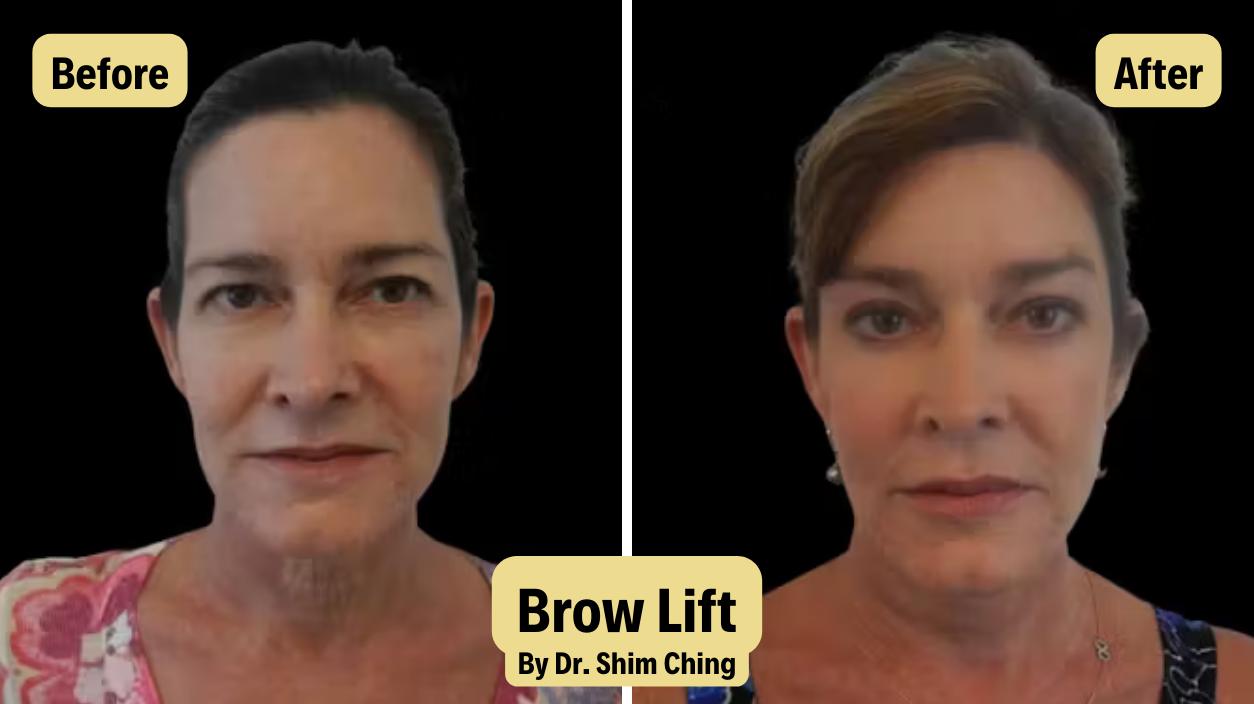
Some people get upper eyelid correction… then slowly feel like it “wore off.”
It didn't. What's actually happening is the brow continues to descend with the natural aging process, and it changes the surrounding areas.
This is why your first step should be an initial consultation that looks at your whole upper face, not just the eyelid area.
What factors influence the longevity of blepharoplasty results?
This is the real list. The one that explains why your friend's results lasted forever and why your other friend feels like they faded fast.
1. Skin elasticity
If your skin has good bounce, it holds shape longer.
If your skin elasticity is compromised (sun damage, smoking history, genetics, skin texture changes), you can still get a refreshed look, but your skin ages differently and may show fine lines sooner. Of course, this is nothing we can't handle with botox or fillers.
2. How much extra skin you had
If you had a lot of excess upper eyelid skin or loose skin, you'll often see dramatic results. But if you're starting with very heavy tissue, your surgeon has to balance improvement with natural-looking results.
3. Fat deposits and how they're handled
Under-eye bags and excess fat aren't always “removed.” Sometimes the best approach is repositioning fat to avoid a hollow look later.
That's not marketing. It's a real difference in outcomes.
4. Your lifestyle choices
This is the part you control and what you absolutely must share with your plastic surgeon in the initial consultation. Be 100% honest and transparent. We can't share your personal information with anyone so say it all.
Lifestyle habits matter more than most people want to admit:
- Excessive sun exposure speeds up how skin ages
- Smoking and heavy drinking reduce blood flow and collagen support
- Poor sleep and chronic inflammation show up fast in delicate skin
- Specific diets can have a long-term effect on the skin over time
- Combinations of supplements or OTK pills can impact the skin
A healthy lifestyle won't freeze time, but it absolutely affects the longevity of your results.
5. Your recovery process
A clean healing process helps protect your final results. Pushing too hard too soon can prolong swelling and stress the tissue.
You need to think of the healing process like wet cement. You don't stomp through it and hope it dries pretty. And if you do stomp through it, you can't look back and get angry at someone else when you see your own shoe prints.
6. Your surgeon's technique and judgment
This is where experience matters.
Eyelids are delicate. The lash line, lid support, symmetry, and tension… all of it matters.
You're not just paying for the surgical procedure. You're paying for taste. Restraint. A personalized approach that matches your facial structure. You're paying for experience and artistry.
Upper lids vs lower lids: what lasts longer?
If we're speaking generally:
- Lower eyelids: often longer-lasting for under-eye bags and puffiness
- Upper eyelids: long-lasting, but more influenced by brow descent and skin laxity over time
That's why most surgeons, me included, evaluate the brow and upper face while discussing upper eyelid surgery.
Because the upper lids don't live alone. They're part of a system. We need to consider the entire system at once.
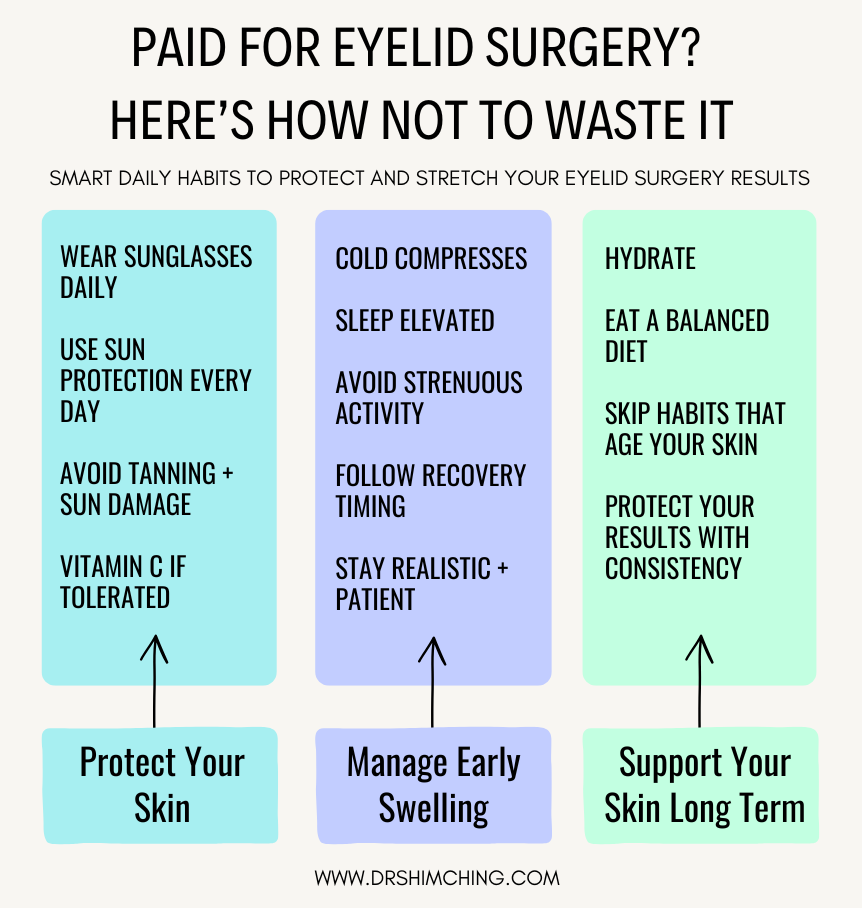
What you can do to make results last longer
This isn't complicated, but it's easy to ignore.
Protect your skin like you actually care about your money
- Wear sunglasses (PLEASE)
- Use sun protection daily, not just “beach days”
- Avoid tanning and minimize sun damage
- Consider vitamin C in your routine if your skin tolerates it (it can support brightness and skin texture over time)
- If you're going skiing, sun bounces off of snow so wear sunglasses
Keep swelling under control early on
During blepharoplasty recovery, your surgeon will likely recommend the following:
- Cold compresses (especially early)
- Avoiding strenuous activities for a set period
- Sleeping elevated
- Following a structured recovery time plan
- Keeping your emotions and expectations in control
Don't sabotage your own results
A balanced diet, hydration, and healthy habits support healing and help your skin age better long-term.
Yes, a balanced diet sounds like a boring answer.
It's also the answer that quietly pays off for everyone.
Recovery time: when you'll look “normal” vs when you'll look “finished”
Most patients feel okay before they look okay. It's emotionally confusing. Or they look okay before they feel normal. Recovery is weird like that. And just because your best friend says she fully recovered in a week, doesn't mean you will or that it's even true. In my experience, it rarely is.
Typical recovery period milestones
- First few days: swelling, bruising, mild discomfort
- 1–2 weeks: many people feel presentable again
- Several weeks: the eyelid area settles more naturally
- Final results: often take a few months as swelling fully resolves and tissues soften
You might experience dry eyes temporarily. That's common in the short term for some patients because the eyelids and surrounding areas are healing and adjusting.
And yes, the surgery can be done under local anesthesia in some cases, or general anesthesia in others. Your surgeon will decide based on your treatment plan, comfort, and what's being done.
Is blepharoplasty permanent?
The correction is long-lasting, but your skin will keep aging.
So is it “permanent” in the sense that you'll never age again? No.
But is it a long-lasting correction that can hold up for many years? Yes.
Many patients eventually choose a follow-up procedure years down the road, especially for the upper lids. That doesn't mean the first one “failed.” It means time happened.
What about dermal fillers instead?
Dermal fillers can help in the under-eye area for the right patient—usually when hollowness is the issue, not puffiness.
But fillers do not remove excess skin. They don't remove fat deposits. They don't fix drooping eyelids. And in the wrong hands, they can make under-eye puffiness look worse.
A good consultation will tell you when fillers are the better option and when they're a detour.
Who's a good candidate?
A good candidate typically has:
- Excess skin or puffiness that bothers them
- Healthy baseline eye function
- Realistic expectations
- Good overall health (and a clear medical history)
Certain conditions (like significant heart disease or uncontrolled medical issues) can affect surgical planning and safety. That's why the initial consultation is more than a quick look, it's the foundation that starts the entire process.
FAQs: How Long Does Blepharoplasty Last?
1. Will my droopy eyelids come back?
They can, especially on the upper lids because skin ages and brow position can change over time. But most patients enjoy long-lasting results, particularly when excess upper eyelid skin was the main concern and the plan matched their anatomy.
2. Do older patients still get long-lasting results?
Yes. Older patients can absolutely get a refreshed appearance and strong longevity of results, but skin elasticity, tissue quality, and healing capacity matter. A personalized approach is everything.
3. What if my upper lids are heavy but I also have under-eye bags?
That's common. Upper eyelid blepharoplasty can address excess skin on the upper eyelids, while lower eyelid blepharoplasty targets under-eye bags in the lower lids. Some patients do both for a balanced refreshed look.
4. Does blepharoplasty improve the appearance of the eyes even if I have fine lines?
It can help. Removing extra skin and reducing puffiness can make fine lines look less dominant. But fine lines caused by skin texture and sun damage may still need skin-focused treatments later.
5. How soon can I exercise again?
Like most surgeons, I also restrict strenuous activities early in the recovery process. The timeline varies, but the rule is simple: don't rush it. You want the healing process calm and controlled so your final results settle cleanly. What you do after the procedure is important and this is where it becomes your responsibility. Don't push it.
6. Can an eyelid lift improve my field of vision?
If excess skin on the upper lids is obstructing your field of vision, upper eyelid surgery may help. All of this will be discussed and documented during your initial consultation.
7. What are potential complications?
All cosmetic procedures carry risk. Potential complications may include infection, bleeding, scarring, asymmetry, prolonged swelling, or dry eyes. The best way to reduce risk is choosing an experienced surgeon and following post-op instructions.
8. What's the biggest thing I can do to protect my results long-term?
Sun protection, wear sunglasses, avoid excessive sun exposure, keep healthy habits, and follow a consistent skincare routine that supports how skin ages. And be sure to tell your surgeon everything you're taking and doing. We need to know if you plan on smoking or vaping after the procedure. We need to know what supplements you've been taking and anything else that has to do with your medical, wellness, or health past, present and future.
Is it worth it?
I can't speak for the patients of other surgeons, but from my experience, my blepharoplasty patients overwhelmingly say, years later; “I still feel like it was worth it.”
Not because it makes you look like a different person.
Because it removes the visual noise. It removes excess skin, puffiness, and heaviness, so your face matches how you actually feel. It shaves off the years.
If you're thinking about it, your first step is a real evaluation of your upper lids, lower lids, brow position, and the appearance of your eyelids as a whole. It's all a unit, after all.
If you want long-lasting results and natural-looking results, don't chase a trend.
Build a treatment plan that fits your eye area, your facial structure, and your aesthetic goals.
If you're ready, schedule an appointment with my aesthetic plastic surgery office today and get a clear answer on what would create the most positive impact for your appearance of the eyes without overdoing it. If you're concerned about the long-term results, let's discuss that.