

Does Blepharoplasty Hurt? The Pain Before, During, After
You don’t worry about your eyes until your eyes start “talking.” You know what I mean.
You catch your reflection and think, Why do I look exhausted?
Your upper eyelids feel heavier. Your lower eyelids look puffy. Maybe excess skin has started to fold over the lash line. Maybe under-eye bags show up in every photo, even the “good lighting” ones. So you start to use more filters before you post.
Does blepharoplasty hurt?
You’re not really asking if you’ll feel anything.
You’re asking if you’ll regret it.
I can’t speak for all patients but I can give you my professional experience as an answer based on performing hundreds of eyelid surgeries.
The short truth: blepharoplasty is usually not “painful”
Most of my patients describe blepharoplasty surgery as:
- Pressure more than pain
- Tightness more than aching
- Mild discomfort more than suffering
- Annoying swelling more than sharp pain
And yes, it varies. And yes, your choices during recovery make a huge difference but we’ll get to that.
An upper blepharoplasty often feels easier than a lower blepharoplasty, simply because the lower lids and surrounding tissue can swell more. The lower eyelid area is delicate skin, and it can be dramatic for a few days even when everything is going perfectly.
But “severe pain” is not the norm.
If you’re expecting breast augmentation-level pain, this is usually nowhere near it. Most patients consider eyelid lift one of the least painful cosmetic procedures.
What hurts most for most people is the numbing injections
Here’s what patients experience but rarely hear spelled out:
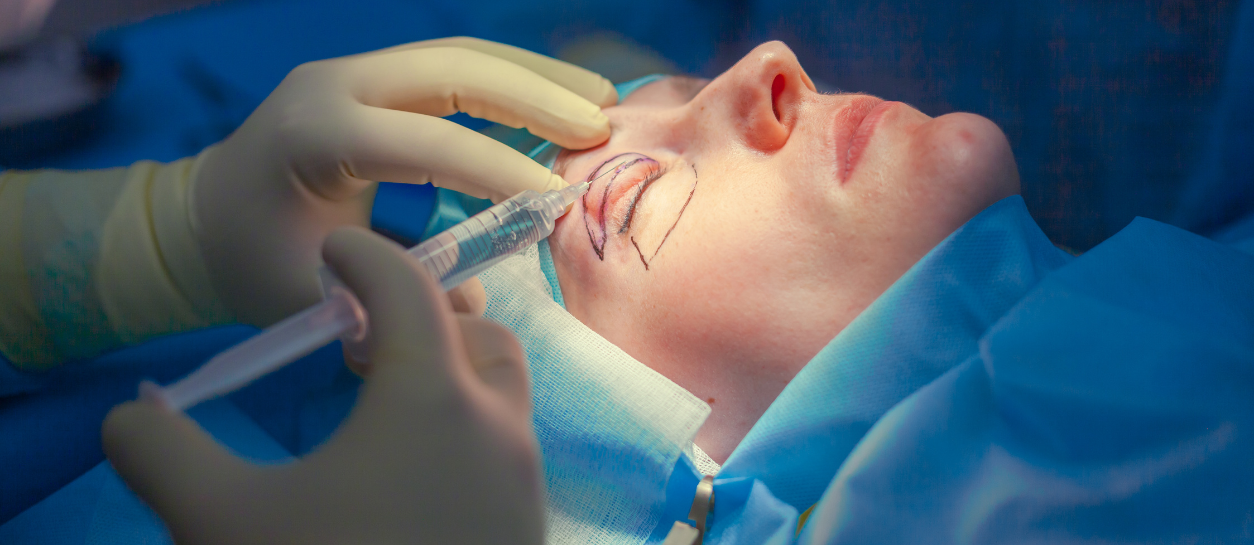
During the blepharoplasty procedure, the sting is usually the local anesthetic
If your procedure is done with local anesthesia (very common for upper eyelid surgery), the “worst part” for many people is the initial local anesthetic injections.
It’s quick. It burns for a moment. Then it fades.
After that, most people report:
- Pressure
- Slight tugging
- A weird sensation of “someone working” near your eyes
- But not pain
If you are doing a more involved lower eyelid surgery, or combining procedures, your surgeon may recommend general anesthesia or deep sedation with a general anesthetic. Some patients prefer that simply because they do not want to be aware of anything at all.
The right type of anesthesia depends on the type of surgery, your medical history, your anxiety level, and your surgeon’s plan.
Upper vs lower: which one hurts more?
Upper eyelid surgery (upper lids)
Most patients say upper eyelid surgery feels easier. Why?
- The incision hides in the natural eyelid creases
- Swelling is usually more manageable
- The recovery time tends to feel faster
People describe it as:
- Tight
- Dry
- Slightly scratchy
- Occasionally tender
Lower eyelid blepharoplasty (lower lids)
Lower eyelid blepharoplasty can feel more intense for a few reasons:
- More swelling in the eye area
- More bruising for some patients
- The lower eyelids can feel “full” or stiff early on
- The under-eye region can look worse before it looks better
This does not mean it hurts more every time. It means it often looks and feels more dramatic during the initial days.
What pain feels like after surgery (based on hundreds of patients)
In the first week, most patients experience:
- Swelling and bruising
- A feeling of pressure around the eyelid area
- Mild discomfort
- Dry eyes or watering
- Sensitivity to light
- A tight pull when blinking
- Occasional short “zings” that come and go
What is less common:
- Sharp pain that keeps escalating
- Pain that does not improve with rest, cold compresses, and medication
If you feel sharp pain that is worsening, or you develop sudden vision changes, that is not a “wait it out” moment. That is a call to your healthcare provider.
The recovery process: what to expect day by day
Every oculoplastic surgeon has a slightly different post-operative care plan, but this general timeline matches what most patients experience.
Day 0 (surgery day)
- Eyes feel numb, then “heavy”
- Mild oozing can happen
- You will likely go home with ointment and instructions
- You may get prescription pain medication, but many people use counter pain relievers instead
Days 1 to 3 (the peak swelling phase)
This is when people feel the most “ugh.”
Expect:
- Residual swelling that looks worse in the morning
- Bruising that spreads
- Dry eyes and the need for eye drops
- A tight feeling across the eyelid skin
What helps:
- Cold compresses and ice packs (or a clean cold pack) as instructed
- Sleeping elevated
- Short walks, but no heavy lifting
- Avoiding strenuous activities and strenuous activity in general
Days 4 to 7 (you turn the corner)
- Swelling begins to settle
- Bruises shift color
- Pain levels usually drop noticeably
- You start feeling more normal during daily activities
Many people return to normal activities around this time, but still need to avoid:
- Heavy lifting
- High-intensity workouts
- Anything that spikes blood pressure
- Absolutely no smoking or vaping or alcohol
High blood pressure and swelling are not friends so call your doctor’s office if you experience them.
Week 2 (presentable, but not “final”)
- You look better to strangers
- You still see small changes daily
- The eyelid lift starts to look more natural
- The creases of the eyelids soften
Your final results are still ahead. Most patients need weeks to months for the appearance of the eyes to fully settle, especially for lower eyelids.
The two big tools for comfort: cold + lubrication
If you want the “best results,” take my boring advice seriously.
Cold compresses and ice packs
Used correctly, they reduce swelling and make the first week easier.
Eye drops and ointment
Dry eyes are common after blepharoplasty recovery. I recommend:
- Lubricating eye drops
- Antibiotic ointment
- Specific instructions for application so you protect the incision line and avoid irritation
If you wear contact lenses, you will usually need to pause them during early eyelid surgery recovery. Contacts can irritate healing tissue and worsen dry eyes.
What you should NOT do (and why it matters)
The most common “pain problem” after surgery is not the surgery.
It’s people trying to live normally too fast.
Avoid during the recovery phase:
- Heavy lifting
- Strenuous activities and strenuous activity that spikes swelling
- Bending over repeatedly
- Rubbing your eyes
- Wearing eye makeup too early
- Contact lenses too early (unless cleared)
- Smoking or vaping (it slows the healing process and can lead to you not healing as well)
- Excess salt and dehydration (they add to swelling)
- Alcohol (it also slows the healing process and can mean you don’t heal as well)
Think of your recovery period like a quiet negotiation with your body. If you push, it pushes back and your body is going to win every time.
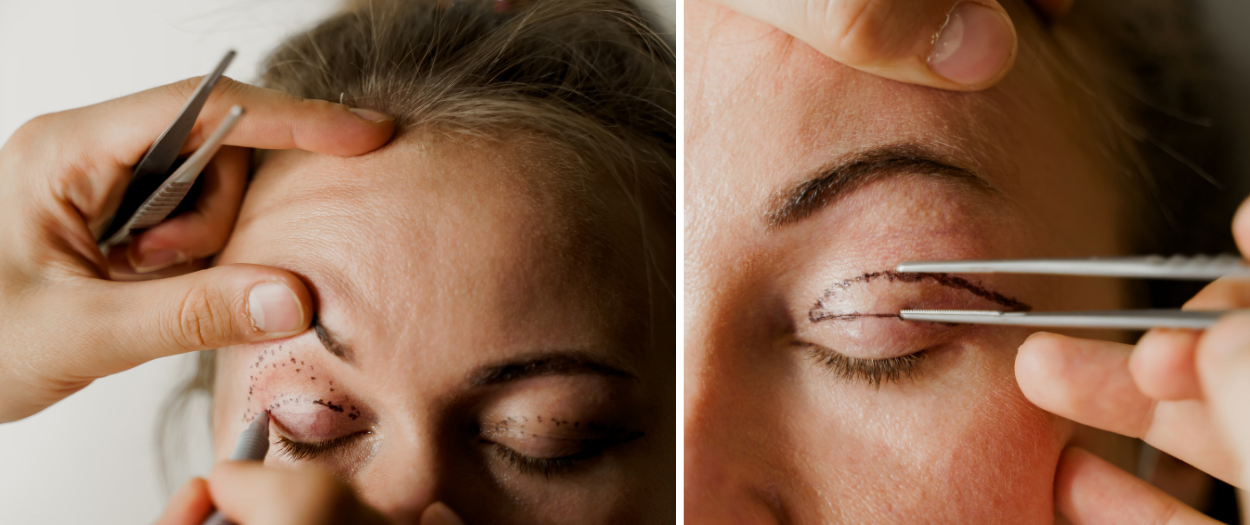
When pain is a red flag
Don’t listen to WebMD if you think something is wrong! Listen to your surgeon and call us or your regular healthcare provider if you notice any of the following:
- Severe pain that is increasing
- Sharp pain that does not respond to medication
- Sudden double vision
- Rapid swelling on one side
- Fever or signs of infection
- Thick drainage, foul odor, or worsening redness
- New issues with peripheral vision or field of vision
- Severe headache with vision changes
These can signal risk of complications, risk of infection, or another medical condition that needs immediate attention. Don’t hesitate!
Potential complications (rare, but real)
Blepharoplasty is common but it’s also still a surgical procedure. And that means there can be complications, however rare. Some of these, rarer, complications can include:
- Infection
- Bleeding
- Prolonged dryness or irritation
- Noticeable scarring (uncommon with good technique)
- Asymmetry
- Temporary changes in eyelid position
- Persistent swelling
Your medical history matters here. Tell your surgeon everything and hold nothing back and that means:
- Heart disease
- Blood pressure issues
- Bleeding disorders
- Eye concerns such as dry eye disease
- Any meds or supplements that affect bleeding
- Any drug use, legal or otherwise
- Smoking, vaping, or snuff use
- Your routine alcohol use
This is also why follow-up appointments and follow-up care are not optional. They catch issues early, before they become problems. Remember, your cosmetic surgeon is on your side and wants you to be happy with the results and your honesty about what you do before and after the procedure can make a huge difference.
Does it hurt more if it’s cosmetic or reconstructive surgery?
Not necessarily.
Pain is more influenced by:
- Type of surgery (upper lids vs lower lids)
- Type of anesthesia
- Extent of excess skin or excess fat removal
- Your individual sensitivity
- Your healing process
Reconstructive surgery can sometimes involve more tissue work, but comfort is still very manageable for most patients with proper post-operative care.
What about combining with a brow lift?
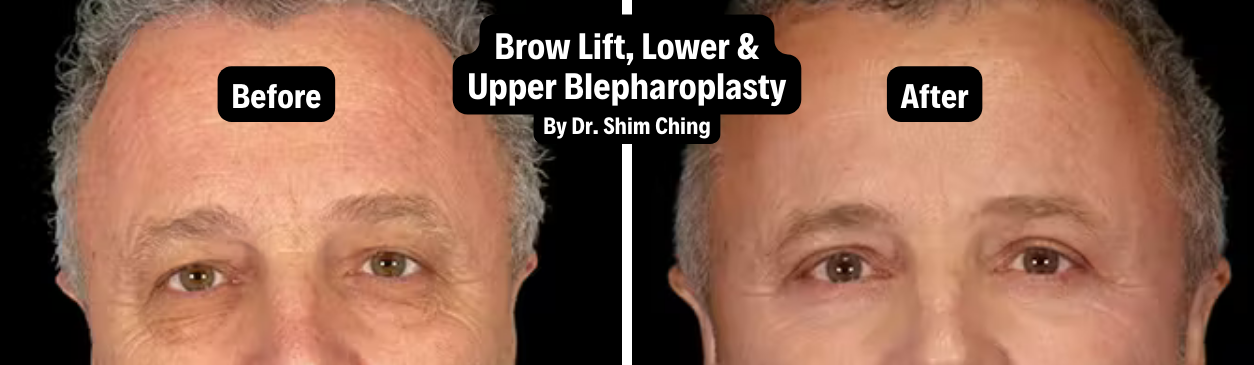
If your droopy eyelids are partly caused by a drooping brow, you may consider a full brow lift. That changes the plan, the recovery time, and sometimes the swelling pattern.
It does not automatically mean “more pain,” but it can mean more tightness, more swelling across the forehead and upper face, and a slightly longer recovery process.
FAQs: Pain, Recovery Time, and Real-Life Questions
Is blepharoplasty surgery done with local anesthesia or general anesthesia?
Both are used. Many upper blepharoplasty cases use local anesthesia with numbing injections. More involved cases, lower blepharoplasty, or combination procedures may involve general anesthesia or deeper sedation. Your type of anesthesia depends on your specific needs.
Will I need prescription pain medication?
Some patients use prescription pain medication for the first day or two. Many do fine with counter pain relievers. Your surgeon will guide you based on your pain levels and medical history.
Are dry eyes normal after eyelid lift?
Yes. Dry eyes can happen during the initial days and first week. Eye drops and ointment help. If dryness becomes severe, tell your provider.
When can I wear eye makeup again?
Not immediately. Eye makeup too soon can irritate incisions and raise infection risk. Ask your surgeon for a clear date based on your healing process.
When can I wear contact lenses again?
Usually after the eyelid area is less swollen and healing is stable. Contact lenses can cause irritation early on, especially if you have dry eyes.
How long will swelling last?
The first week is the loudest. Residual swelling can linger for weeks, especially after lower eyelid surgery. Final results continue to refine for months so don’t panic when you’re not thrilled with your results after two weeks. You still have a way to go.
Is double eyelid surgery the same thing?
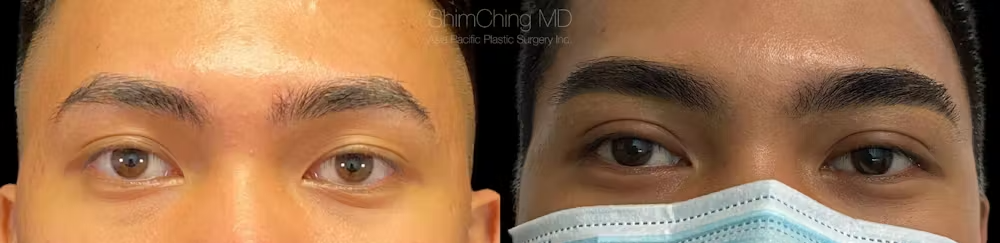
Not exactly. “Double eyelid surgery” usually refers to creating or defining a crease, often discussed in Asian blepharoplasty. It can overlap with upper eyelid correction, but the goals and technique can differ.
What does “pain” usually feel like?
Tightness, pressure, and mild discomfort. Some sharp little sensations can happen as nerves wake up. Severe pain is not typical and should be reported.
Eyelid Surgery Isn’t That Painful
Most patients expect blepharoplasty to hurt more than it does.
The blepharoplasty procedure is usually uncomfortable, but not brutal. The first week can feel awkward. Puffy. A little tender. And yes, you will likely have moments where you think, I look like I lost a fight. And you did lose a fight. You lost a knife fight to me in my operating room.
Then it calms down.
Swelling drops. The eyelid skin softens. The stitches come out. The bruising fades. And one day you catch your reflection and realize your eyes finally match your energy again. A more youthful appearance. A calmer look of your eyes. A face that does not look tired before you even speak.
If you want the safest plan and the best results, make your first step an initial consultation with a board-certified facial plastic who has performed hundreds of these procedures. And yes, I’m describing myself.
Bring your questions. Bring your medical history. Mention your eye concerns up front. Ask about anesthesia. Ask about recovery time. Ask what a normal recovery process looks like for your specific case.
You will feel better when you know what’s normal.
And you will heal better when you are prepared.