
By Dr. Shim Ching, MD
You know the look.
You slept fine. You feel fine. But your reflection keeps telling a different story. Heavy lids. A shadow over the eyes. Maybe those under-eye bags that showed up one day and never left. Friends ask if you’re stressed. Or sick. Or “doing okay.” Which, on the surface, is quite nice of them.
Most people assume the fix is obvious: “I need eyelid surgery.”
Sometimes, yes.
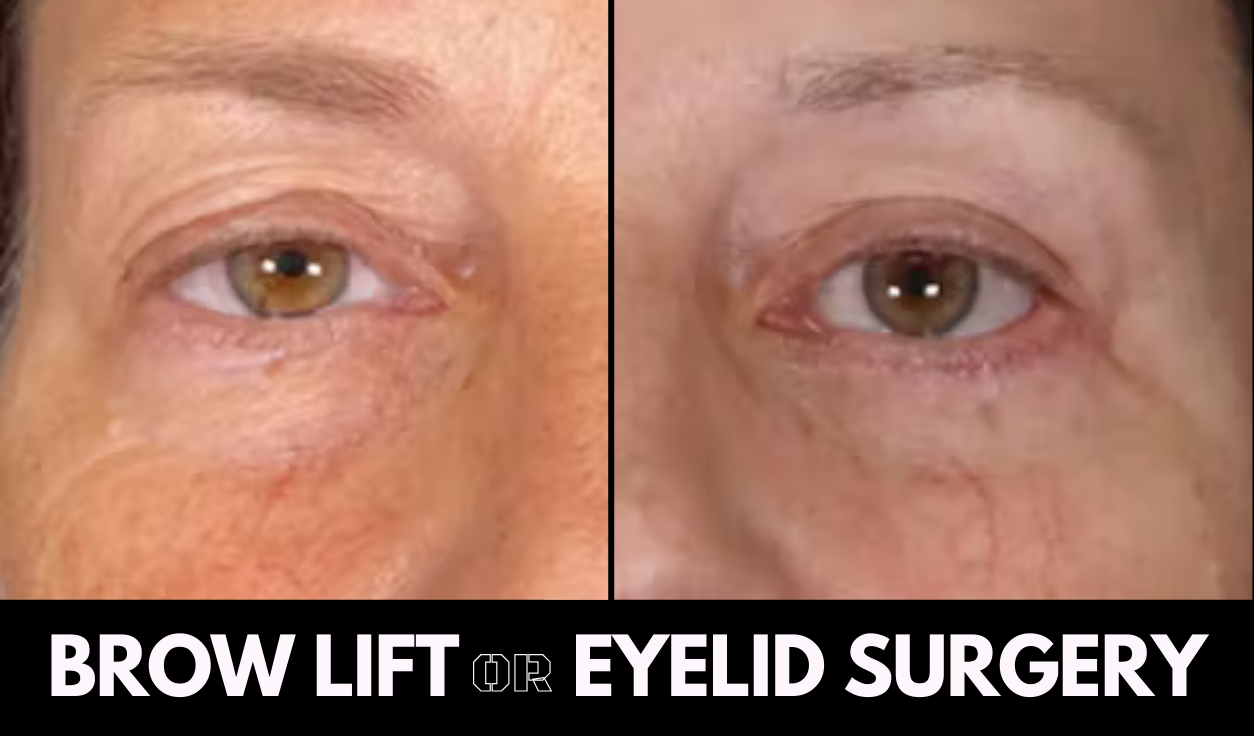
Other times, your eyelids are getting blamed for a problem that started higher up. The brow drops. The forehead tightens and pulls. The brow line sinks. And suddenly your upper lids look heavier even if there isn’t much extra going on in the lid itself.
That’s why “brow lift vs blepharoplasty” isn’t a Buzzfeed beauty quiz. It’s a diagnosis question.
Let’s make it simple. Let’s make it honest. And let’s help you make the right choice for your face, your anatomy, and your real life while adding recovery and your finances into the equation.
The real culprit is often excess skin, not “aging”
A lot of people hate that word, aging. It feels like a verdict. It’s harsh and permanent.
What’s happening is more mechanical than dramatic.
Skin can loosen. Tissue can drift. Fat deposits can shift. Your brow position can slide down millimeters that change your whole expression. Yes, millimeters do make a difference. You can end up with excess eyelid skin or the appearance of it, even if the eyelid itself is not the main issue.
So, before you pick a procedure, let’s reframe the question:
Where is the heaviness coming from?
- The eyelid itself
- The brow and forehead area
- The lower eyelids and under-eye region
- Or some combination
That’s the first step.
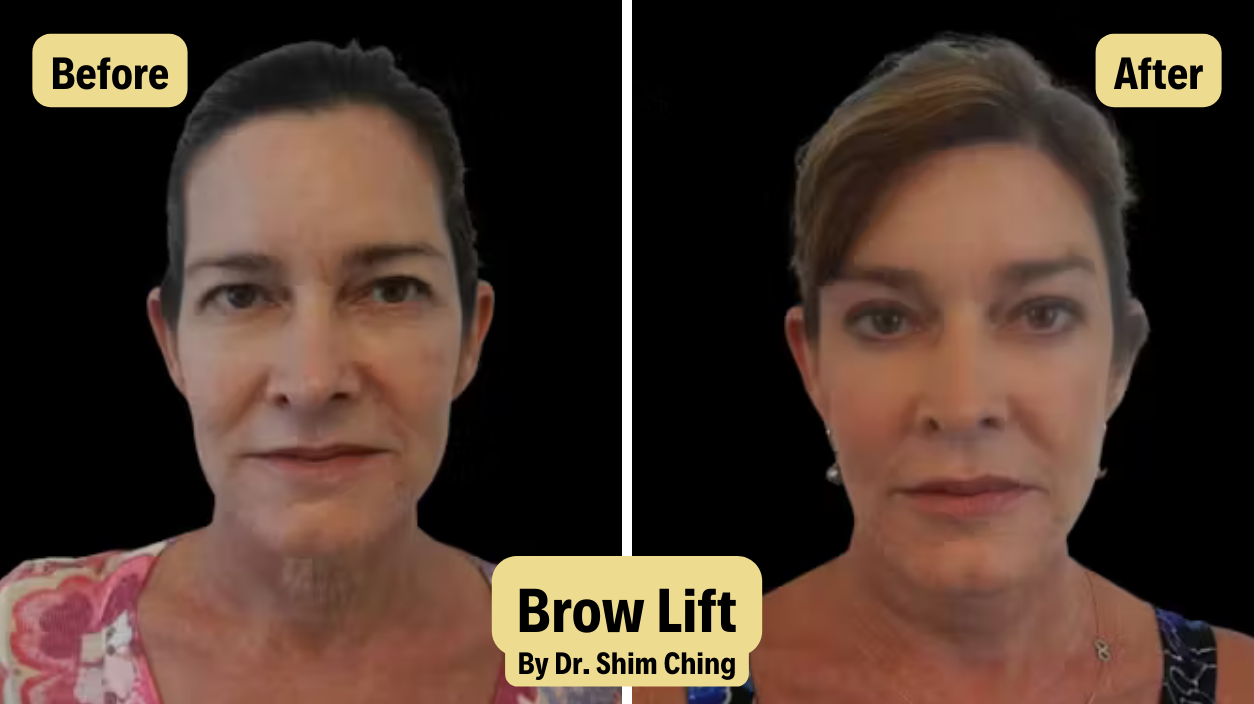
Forehead lift vs eyelid lift: same complaint, different fix
People often use “forehead lift” and “brow lift” like they’re vastly different. Take it from me, they’re closely related.
A forehead lift (often used interchangeably with brow lift surgery) focuses on the upper face. It targets the drooping brow, brow elevation, and sometimes frown lines and deep forehead wrinkles.
An eyelid lift (blepharoplasty) focuses on the appearance of the eyelids themselves, especially excess upper eyelid skin, droopy upper eyelids, and under-eye bags.
Both can create a more youthful appearance.
They just do it in different areas.
What is upper blepharoplasty and who is it for?
Upper blepharoplasty (also called upper eyelid surgery or upper lid blepharoplasty) removes or reshapes tissue in the upper lid.
It’s usually chosen when the primary concern is:
- Droopy eyelids caused by excess upper eyelid skin
- A heavy fold that hides your natural crease
- Makeup transfer because skin rests on lashes
- An “aged appearance” that is clearly coming from the lid itself
- In some cases, lid heaviness affects the upper field of vision
The goal is an alert appearance that still looks like you. You want natural. You don’t want your friends wondering whether you stood behind a jet engine for too long.
Not “surprised.” Not pulled. Not different.
Just… awake.
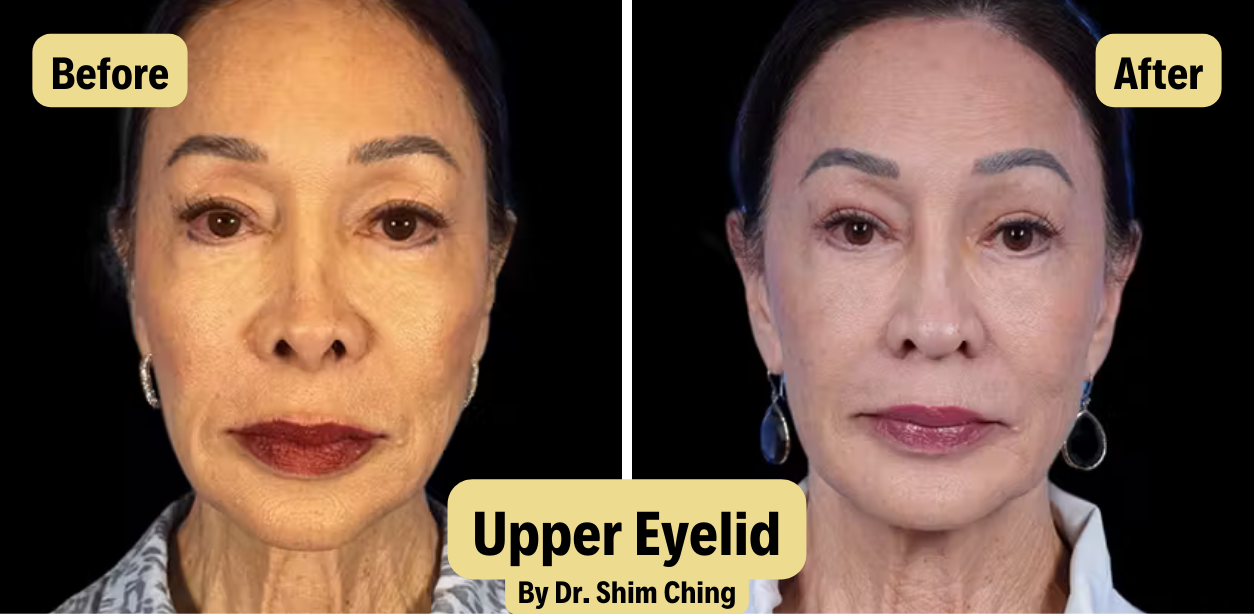
What upper eyelid surgery actually changes
Upper eyelid surgery changes the appearance of the eyelids by addressing:
- Excess skin
- Sometimes a small amount of muscle
- Sometimes fat deposits, depending on facial structure and facial anatomy
When you’re on my surgical table, I pay attention to your natural crease, symmetry, and how your eyelids sit when your face is relaxed. That’s where natural-looking results come from. Make sure you speak to your plastic surgeon about this and be sure you’re both on the same page.
What is lower eyelid surgery and when does it matter?
If your frustration is under your eyes, you’re in lower blepharoplasty territory.
Lower eyelid surgery (including lower lid blepharoplasty) is often used for:
- Under-eye bags
- Puffiness from fat deposits
- Shadowing and contour changes
- Loose skin and fine lines under the eyes
- The “tired even when I’m not tired” look
Lower eyelids are delicate. The margin matters. The support matters. The wrong plan can change your eye shape in a way you didn’t ask for.
That’s why the blepharoplasty procedure for lower eyelids is less about “taking away” and more about shaping, support, and smooth transitions.
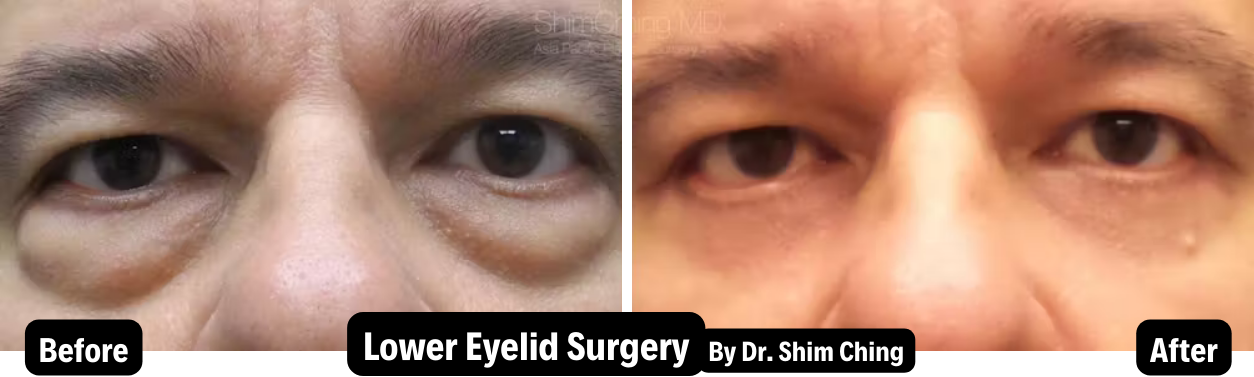
A note on “bags” because they’re complicated
Some under-eye bags are fat pushing forward. Some are swelling. Some are hollowing that creates contrast. Many people have a mix.
A good consult with your surgeon will map that out. Guessing leads to disappointment. Be direct and communicate openly. Remember, your medical privacy is protected by law. Say it all because your doctor can’t share it with anyone.
What is brow lift surgery and what does it fix?
A brow lift procedure addresses the brow and forehead area.
If you have a drooping brow or sagging brow, your upper lids can look heavier even when there isn’t much excess eyelid skin.
That’s the trap.
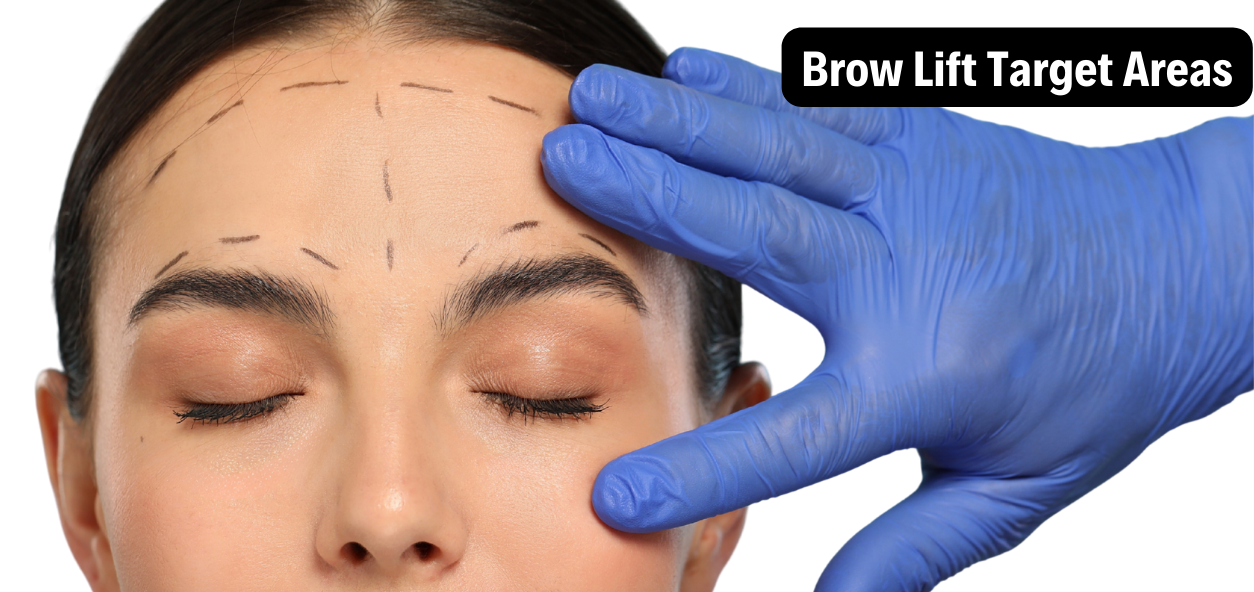
A good brow lift targets the following:
- Brow position and brow elevation
- The eyebrow area and brow line
- The upper face, including the forehead area
- In many cases, frown lines and smooth forehead wrinkles goals
It can also reduce the appearance of wrinkles across the forehead, especially when the brow drop is forcing your forehead muscles to overwork just to keep your eyes open.
If you find yourself raising your eyebrows all day, that’s a clue. Mention that during your consultation.
The quick “mirror test” that explains a lot
This isn’t a substitute for sitting down with an experienced surgeon. But it helps you understand what you’re seeing.
Stand in front of a mirror. Relax your forehead. Then gently lift the outer brow (near the temple) with two fingers.
Ask yourself:
- Did your upper lid suddenly look lighter?
- Did the heaviness improve without touching the lid skin?
- Did your eye area look more open without changing the eyelid fold much?
If yes, your main concern may be the brow, not the lid.
Now gently lift just the upper lid skin (without lifting the brow).
If that helps more, the lid is likely the issue.
Many people need both. But one is usually the driver.
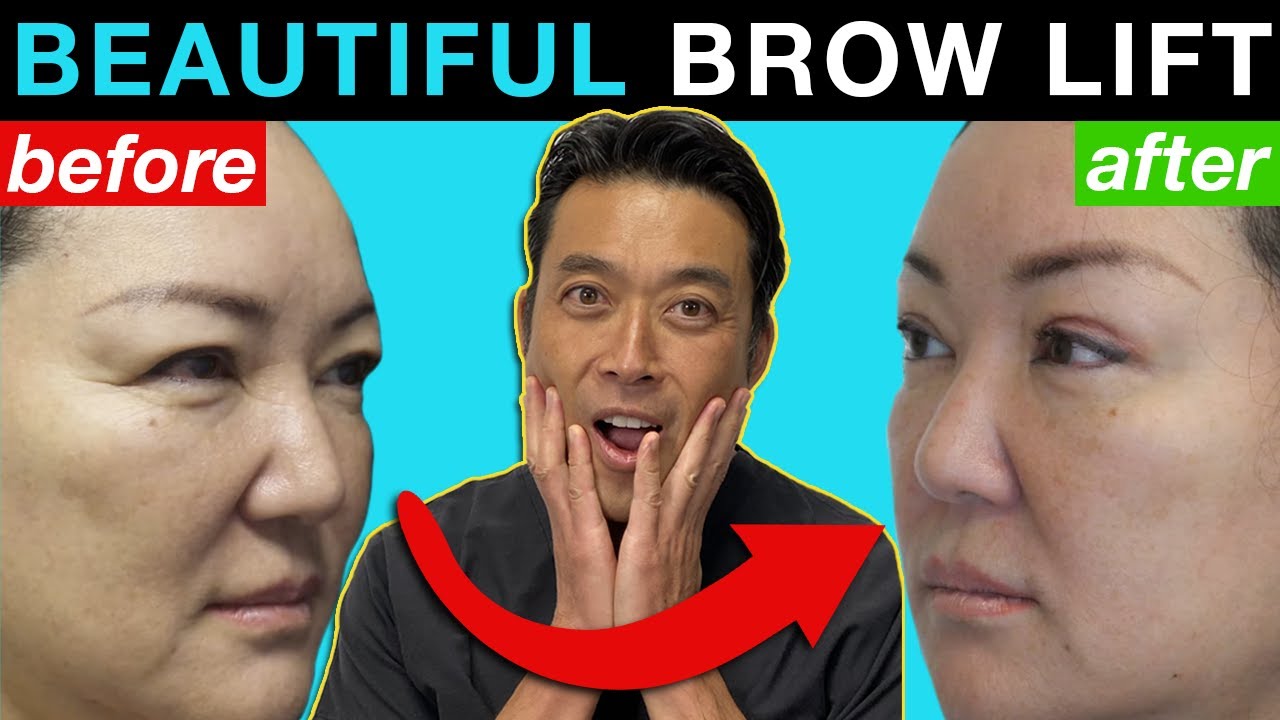
Different ways to lift a brow: not all brow lifts are the same
“Brow lift” sounds like one thing. It isn’t.
Here are common types, depending on your aesthetic goals, facial features, and anatomy:
Endoscopic brow lifts
This approach uses small incisions hidden in the hairline with a camera-guided technique. Endoscopic brow lifts can be a strong option for people who want brow elevation with minimal visible scarring.
Temporal brow lifts (often used for outer brow heaviness)
If your main concern is the outer third of the brow dropping, temporal brow lifts can focus on that area.
A temporal brow lift targets the tail of the brow, which can lift the outer eye area and reduce the “hooded” look that shows up on the sides.
This can be especially helpful when people complain about heaviness, but the inner brow is fine.
Coronal brow lift
This is the browlift that uses a hidden incision in the scalp. The incision does stretch from ear to ear. This provides the greatest degree of browlift out of all techniques and in most patients the scar is completely hidden.
Hairline browlift
In patients with a high hairline, most of the above techniques shift the hairline even higher when they lift the brow. For these patients, a hairline brow lift may be a good option.
An incision is made at the hairline and the hairline can be shifted lower and lift the brows at the same time. This technique can be used for hairline advancement alone, without a browlift, which I often do for young patients who dislike their large forehead due to a high hairline.
“Forehead lift” language
Some practices use forehead lift when discussing broader forehead area changes. Others say brow lift. The plan matters more than the label.
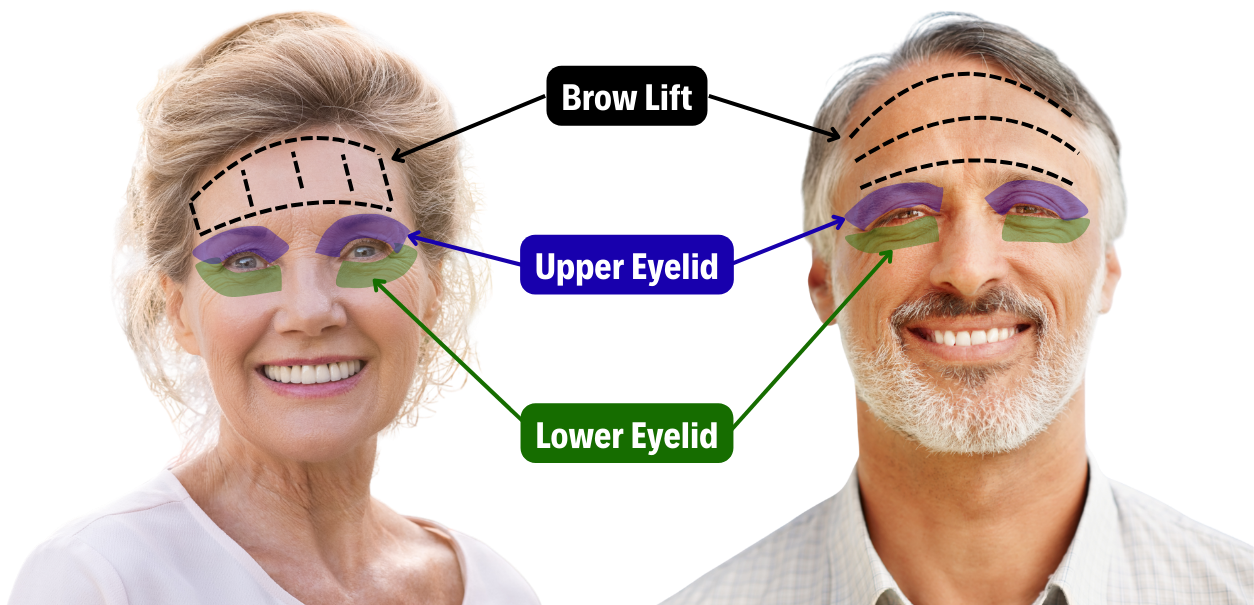
Blepharoplasty vs brow lift: what each procedure does best
Here’s the cleanest and easiest way to think about it, broken down.
Blepharoplasty procedure is best for:
- Excess eyelid skin
- Droopy upper eyelids caused by lid tissue
- Puffy under-eye bags
- Lower eyelids laxity and contour issues
- Upper lid blepharoplasty goals like a cleaner natural crease
Brow lift procedure is best for:
- Drooping brow and sagging brow
- Low brow position that makes you look stern or tired
- Forehead area heaviness and deep forehead wrinkles
- Frown lines that make you look angry when you’re not
- Upper face repositioning for a higher position and a softer expression
If you’re trying to pick the best option, don’t ask “which is better.”
Ask: Which one matches the source of my heaviness?
That’s the best way to get optimal results.
The “wrong procedure” problem (and why it happens)

This is where patients get burned.
If your brow is low and you do only upper blepharoplasty, you might remove skin to compensate. It can help. But it can also create a stretched look if the brow keeps dropping over time.
If your lids are truly heavy from excess upper eyelid skin and you do only a forehead lift, you might lift the brow and still feel like the lid fold is bulky.
The best results come from matching the plan to your facial anatomy and specific concerns.
Combining procedures: when it makes sense
Some faces need a single change. Many need a small combination.
Combining blepharoplasty surgery with a brow lift surgery can make sense when:
- The brow is drooping and there is true excess eyelid skin
- You want a more open eye area without overdoing either one
- The goal is natural beauty, not “tight”
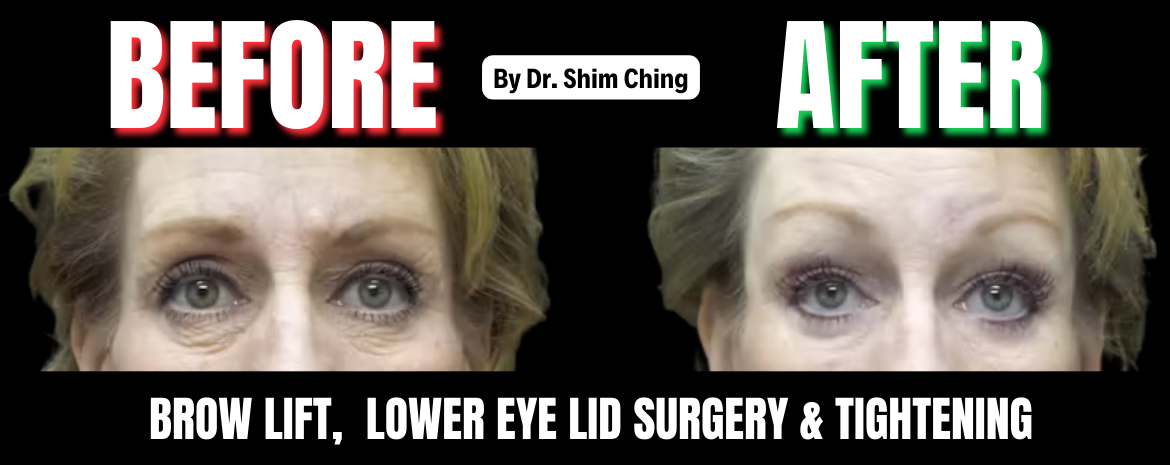
A combined plan can also better balance different areas, which is often how you get long-lasting results. Your overall cost will also be less if you combine procedures because you won’t be paying for the same requirements twice like anesthesia.
Recovery period: what most people really want to know
Let’s talk real life. Not Instagram life.
Brow lift recovery (general expectations but keep in mind everyone is different)
- Swelling and bruising in the upper face and around the eyes is common
- Forehead tightness can happen early on
- Many people return to desk work in about 7 to 14 days, depending on the approach and the person
- Hairline tenderness can happen if incisions are in the scalp
Eyelid lift recovery (general expectations, again, everyone is unique)
- Bruising and swelling around the eyes is common
- Eyes can feel dry or watery early on
- Most people look “presentable” faster than they feel presentable
- Lower eyelid surgery can have a longer visible recovery than upper eyelid surgery
You may be given pain medication. Many patients use it briefly, then switch to simpler comfort measures based on the surgeon’s instructions. With my patients, I discuss their pain threshold, discomfort, and history of prescription pain killers before the surgery.
Your recovery period depends on:
- Your procedure type
- Your tissue response
- Whether you combined cosmetic procedures
- Your baseline health and medical history
- What meds you’re currently taking
- Do you smoke and how long before the procedure did you quit?
- What supplements are you taking?
- How is your sleep pattern?
This is why good overall health matters. And, most importantly, why you must be completely honest with your surgeon in the initial consultation. Don’t hold anything back because that one thing you were too embarrassed to mention, might be what slows your recovery or could even alter how you recover. I can’t speak for all surgeons, but when I ask a patient whether there’s anything else I should know, I mean it. Tell me everything. Did you smoke weed last week? Are you taking a couple Tylenol daily, but the reason why embarrasses you, so you haven’t told anyone? Tell me everything.
Cost: why brow lift and blepharoplasty can be priced differently
Cost differences between a forehead lift and eyelid lift often come down to:
- Surgical time
- Technique used
- Facility fees
- Anesthesia
- Whether more than one surgical procedure is performed
If you’re comparing cosmetic surgeries, don’t compare price alone. Compare:
- The plan
- The surgeon’s experience
- Before and after consistency
- Your specific concerns and goals
The “cheaper” choice can be the expensive one if it doesn’t solve your main concern.
Potential complications: the honest list
All cosmetic surgery has risks. Your surgeon should discuss these risks with you very clearly but it’s your responsibility to be fully transparent regarding your medical history, all meds including supplements, habits (smoking, vaping, etc.), travel and the list goes on. Never hold back from your doctor.
Possible risks vary by procedure, but include:
- Bruising, swelling, delayed healing
- Infection (uncommon, but possible)
- Scarring (usually well-hidden, but it depends on technique and healing)
- Temporary numbness (more common with brow lift approaches)
- Dry eye symptoms (can happen after eyelid work)
- Asymmetry (faces are not perfectly symmetric to begin with)
A surgeon with extensive experience reduces risk through planning, technique, and patient selection. Your job is to show up with realistic expectations and be honest about your health history.
Who’s a good candidate for these facial rejuvenation procedures?
A good candidate usually has:
- Good overall health
- Realistic expectations
- A clear primary concern (or a clear set of specific concerns)
- Facial structure that fits the plan
- A willingness to follow aftercare
If you’re considering facial plastic surgery, an initial consultation should include:
- A facial anatomy assessment
- Brow position evaluation
- Eyelid tissue evaluation
- Discussion of aesthetic goals
- A plan that matches your facial appearance, not someone else’s
FAQs: Brow Lift vs Blepharoplasty (the questions I’m often asked)
1. Can a brow lift fix droopy eyelids?
Sometimes. If the droopy look comes from a drooping brow, raising the brow position can relieve the heaviness and improve the appearance of the eyelids.
If you have excess upper eyelid skin, you may still need upper eyelid surgery for the best choice and best results. This is where the initial consultation comes in.
2. What’s the difference between an eyebrow lift and a forehead lift?
Typically, eyebrow lift and forehead lift describe the same family of procedures. The difference is often how wide the correction is and what technique is used. Ask what areas are being changed, where the small incisions go, and what brow elevation is expected.
3. What if my main concern is under-eye bags?
That points toward lower blepharoplasty. Under-eye bags often involve fat deposits and skin changes in the lower eyelids. A brow lift usually won’t fix that.
4. Do these procedures help fine lines and the appearance of wrinkles?
They can, depending on what is causing the appearance of wrinkles.
- Brow lift surgery can reduce the look of forehead lines and sometimes frown lines by repositioning tissue and easing the muscle strain that creates deep forehead wrinkles.
- Lower eyelid surgery can improve fine lines related to loose skin under the eyes, though some fine lines may still need skin-focused treatments.
5. Will I look “different”?
The goal should be natural-looking results. You should look like you, just less weighed down.
If you want to keep your natural beauty and avoid an overdone look, talk about your best suits style. Bring photos of yourself from a few years ago that you love. That helps guide the plan.
6. What’s the best option if my brow line is low on the outer side?
A lateral brow lift or temporal brow lifts are often discussed for that pattern. It depends on your eyebrow area shape, facial features, and how much lift is needed for a higher position.
7. Is upper lid blepharoplasty the best way to fix droopy upper eyelids?
If the droopy upper eyelids are caused by excess upper eyelid skin and lid tissue, upper lid blepharoplasty is often the better option.
If the droop is driven by a sagging brow, the better option may be a brow lift procedure.
8. How long do results last?
Long-lasting results depend on:
- Your anatomy
- Skin quality
- Technique used
- Lifestyle factors
Many people get durable improvement, but nothing freezes time. The goal is a meaningful reset that still ages naturally.
9. What about crow’s feet?
Crow’s feet live at the outer corner of the eye area and are often influenced by muscle movement and skin texture.
Surgery can improve the overall frame of the upper face, but crow’s feet often need other approaches as part of a full plan.
10. How do I make an informed decision?
Don’t pick a procedure from a menu or a YouTube video. Schedule a consultation and choose an experienced surgeon. In a consultation with me, we would cover the following:
- Explain your facial structure clearly
- Show you how different areas are connected
- Talk through different ways to reach your aesthetic goals
- Discusses potential complications without getting weird or vague
- Consider your medical history to determine your recovery
- Speak to my financial guru to help you get the procedure(s) paid for without straining yourself financially in easy monthly payments
Ask as many questions as you need and be prepared to take notes. Then decide. That’s how you make the right choice.
What most patients really need to hear
If your eyes look tired, it’s usually not because you’re “aging badly.”
It’s because something shifted.
Skin loosened. The brow dropped. Fat deposits changed. The upper face started doing that slow slide that makes you look heavier and more serious than you feel.
A brow lift surgery can restore brow position and soften the upper face.
A blepharoplasty procedure can remove excess eyelid skin, refine the natural crease, and address under-eye bags in the lower eyelids.
Sometimes the best results come from doing both in expert hands.
If you need one takeaway, let it be this:
Treat the cause, not the complaint.
And if you’re ready to talk through your specific concerns, your first step is a thorough initial consultation with a facial plastic surgeon who has years of experience and can map out the best choice for your facial appearance.
If you’ve been on the fence, and are in Hawaii or plan to visit, call my office and schedule a consultation today. Even one high-quality consult can save you from the wrong procedure and steer you toward the results that will make you happier and have you enjoying mirror time again.